

Many manufacturers face the same problem: decades of expertise in making the product, and no relationship with the people who use it. No market presence, no customer list, no data to build on.
Transformed a legacy factory into a profitable D2C brand

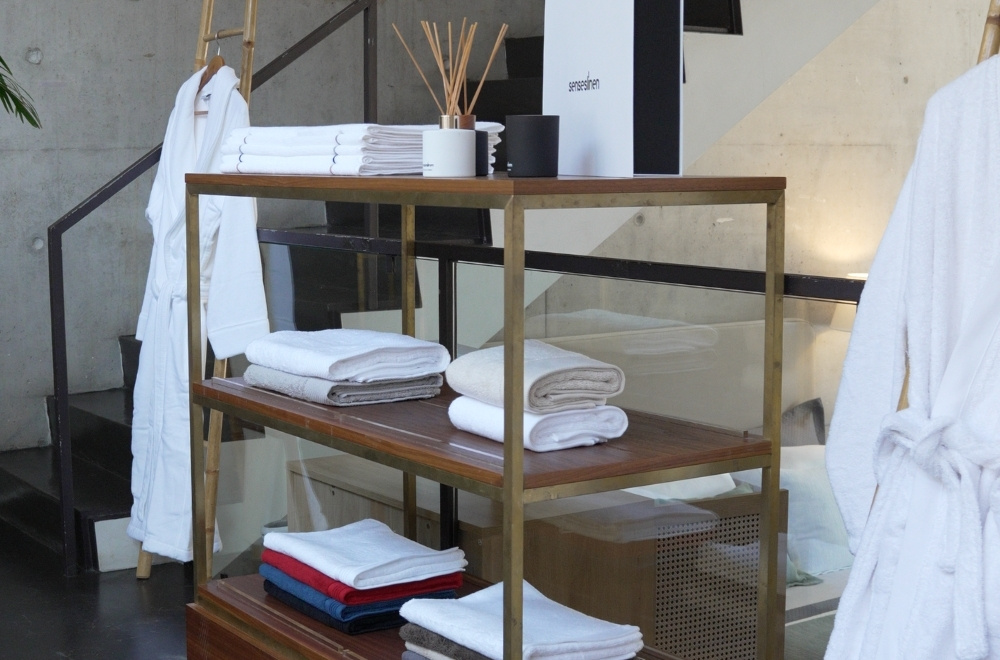
senseslinen makes bedding and bath textiles in northern Portugal, in a mill that belongs to the group behind it. That is rarer than it sounds. Most bedding brands design a product and hand it to a factory. Here, the brand and the factory sit inside the same company. Egyptian Cotton, Mulberry Silk, Linen, Percale. The kind of quality that ends up in hotels you remember.
For decades, that quality reached people under other names. Then came the decision to sell it under one of its own.
01. Nobody Had Heard of Them
Without a name, the first sale is the hardest thing in the business. And there was a harder version of the problem underneath: people buy sheets by touching them. Here, the only thing they could touch was a screen.
02. Every Customer Had to Be Bought
Growth came entirely from paid ads. That works until you do the math. If you pay for every single customer, you don’t have a business, you have a spending habit.

01. People Buy Sheets Once Every Few Years
A customer who buys once and comes back in four years looks like a loss on any monthly report. That first purchase alone tells you to stop advertising.
02. Too Many Channels, No Clear Picture
More channels meant more noise. Without tracking that tied everything together, deciding where the next euro should go was guesswork with a budget attached.
Turning a Factory Into a Brand
A mill knows how to manufacture at scale. Selling directly to the customer asks for something else entirely: a price that works, a clear reason to choose you, and the whole digital operation behind it. None of that existed, because the factory had never needed it.
HOW?
01. Deciding What the Brand Stands For
We took what the mill knew in technical terms, thread counts, fiber lengths, weaves, and turned it into language that makes someone want to buy.
02. Building the Store, Not Just the Website
The site was only part of it. We built the whole operation behind the sale: product data, payments, shipping and fulfillment, all connected so that buying takes as few steps as possible.
03. A Different Approach for Each Market
One set of content for every country is cheap to produce and expensive to run. We built content market by market, so the budget worked with what people in each country actually respond to.
We Rented Attention First. Then We Stopped Paying Rent.
Nobody searches for a brand that doesn’t exist yet. So the first move was to pay for attention and prove the product could sell. The second was to build something the brand would own outright, so the cost of finding a customer kept going down instead of up.
HOW?
01. Paid Media to Prove It Worked
We started with Google Ads and Meta Ads, not to scale, but to answer one question: will people buy this online? Once the answer was yes, we had a model worth investing in.
02. SEO to Stop Paying for Every Visit
Paid traffic disappears the day you stop paying for it. We built the organic foundation so the brand could be found by people already looking for what it sells. That traffic costs nothing extra and it compounds.
03. Borrowing Trust From People Who Already Had It
A new brand has no reputation to lean on. We partnered with creators whose audiences already trusted them, so that trust could carry over. Those partnerships still bring in revenue today.
04. A Pop-Up Store, So People Could Touch It
The biggest objection in online textiles is that you can’t feel the product. We answered it in person, with a pop-up store where people could do exactly that.

We Didn’t Wait for the Next Set of Sheets
Bedding gets replaced every few years and there is nothing anyone can do about that. So instead of waiting, we gave customers reasons to buy in between. The gap between orders stopped being something to accept and became something to work on.
HOW?
01. Products People Actually Run Out Of
Sheets last years. Adding products people actually run out of, like fragrances, gave customers a reason to come back within months rather than years.
02. Email That Keeps the Relationship Alive
We set up automated email flows so the brand stays in touch between purchases. It costs almost nothing to run and it brings people back on its own.
03. Making the First Order Bigger, and the Next One Sooner
We built the cross-sell and up-sell mechanics into the buying journey, so a first-time customer leaves with more than they came for, and comes back faster than they otherwise would.

Three Markets, One at a Time
Opening everywhere at once spreads the budget thin and gives you nothing conclusive in return. So each market had to prove it could make money before the next one got funded. That discipline is why the expansion held.
HOW?
01. One Market Until It Worked
Everything went into a single market until it was genuinely established, and only then did the next one open. Full attention on one country beats a thin presence in three.
02. Rebuilt for Each Country, Not Translated
What convinces someone in Spain is not what convinces someone in Sweden. So the positioning was rebuilt for each market rather than run through a translator and hoped for the best.
Give us two weeks of read-only access to your analytics. We’ll review your data and come back with key opportunities and quick wins. No cost. No commitment.
Traffic on its own means nothing. We built it so each stage pays for the next: paid media proved the model, organic brought the cost down, and retention made every customer worth more than the first order.
€0 to €1,000,000 in 1 year
A factory with no audience of its own became a brand selling directly to its customers, keeping the full margin on every order.
3 International Markets
Entered one at a time, each with its own positioning.
3.94x Blended ROAS
Every euro spent on advertising returned €2.34 in revenue, across all channels and all markets.
“Even when they weren’t foreseen, they always met our needs and maintained the same level of attention and detail.”
WAY is not just a marketing agency. It is a business partner willing to grow with us and to work together to achieve success. What impressed me most was the fact that I felt I was not just working with a subcontractor. Throughout the project, we felt that WAY was part of our team, completely involved and committed to our success. Sometimes they were the ones who first detected problems and solved them even before we realized it.
– Executive Director, senseslinen
Selling direct is not something you launch. It is something you build.
01
A Factory Is an Asset. It Is Not a Brand.
Owning the mill protects the product and the margin. It does nothing about whether anyone knows you exist or wants to buy from you.
02
Paid Only Proves if It Sells.
Rented traffic is how you find out whether the model works. It is not how you grow, because if one day you stop paying, it stops.
03
A Launch Is a Sequence, Not a Campaign.
Brand, store, demand, retention, new markets. Each one had to prove itself before the next one got funded.




Fill in the form and tell us where your ecommerce is falling short. We will get back to you shortly with what we find.
Users’ personal data is collected and processed by Segmento Aliciante, LDA, with the purpose of managing the relationship with users, complying with the obligations and conducting Marketing campaigns whenever there is consent to do so.
If you wish to exercise your rights of access, rectification, portability, restriction of processing, opposition or deletion of your personal data, register a complaint or simply want more information, please contact our Data Protection Officer at my@way.pt.
Cookies are small files containing a set of text characters that are sent to your computer when you visit our website.
Cookies that, by legal definition, are not strictly necessary for using the website, however, they do fulfil important tasks.
Without these cookies, functions intended for your browsing convenience on our website, such as the automatic completion of form details, will no longer be available. Personal user settings, such as preferred language, cannot be retained without these cookies, so they must be re-entered on every page.
In addition, without these cookies, we would not be able to meet your individual requirements with personalized offers. They serve, among other purposes, to:
https://support.google.com/analytics/answer/6004245
https://www.facebook.com/about/privacy